

What reading Breath made me reflect on as a diver
I have just finished Breath by James Nestor. In essence, the book argues that breathing affects far more than most modern people assume, shaping health, physiology, sleep, stress, and performance in ways we have largely forgotten. It is not a scuba book, and it does not pretend to be. But it does offer a useful reminder: breathing is never just a background bodily function. For a diver, that lands differently.
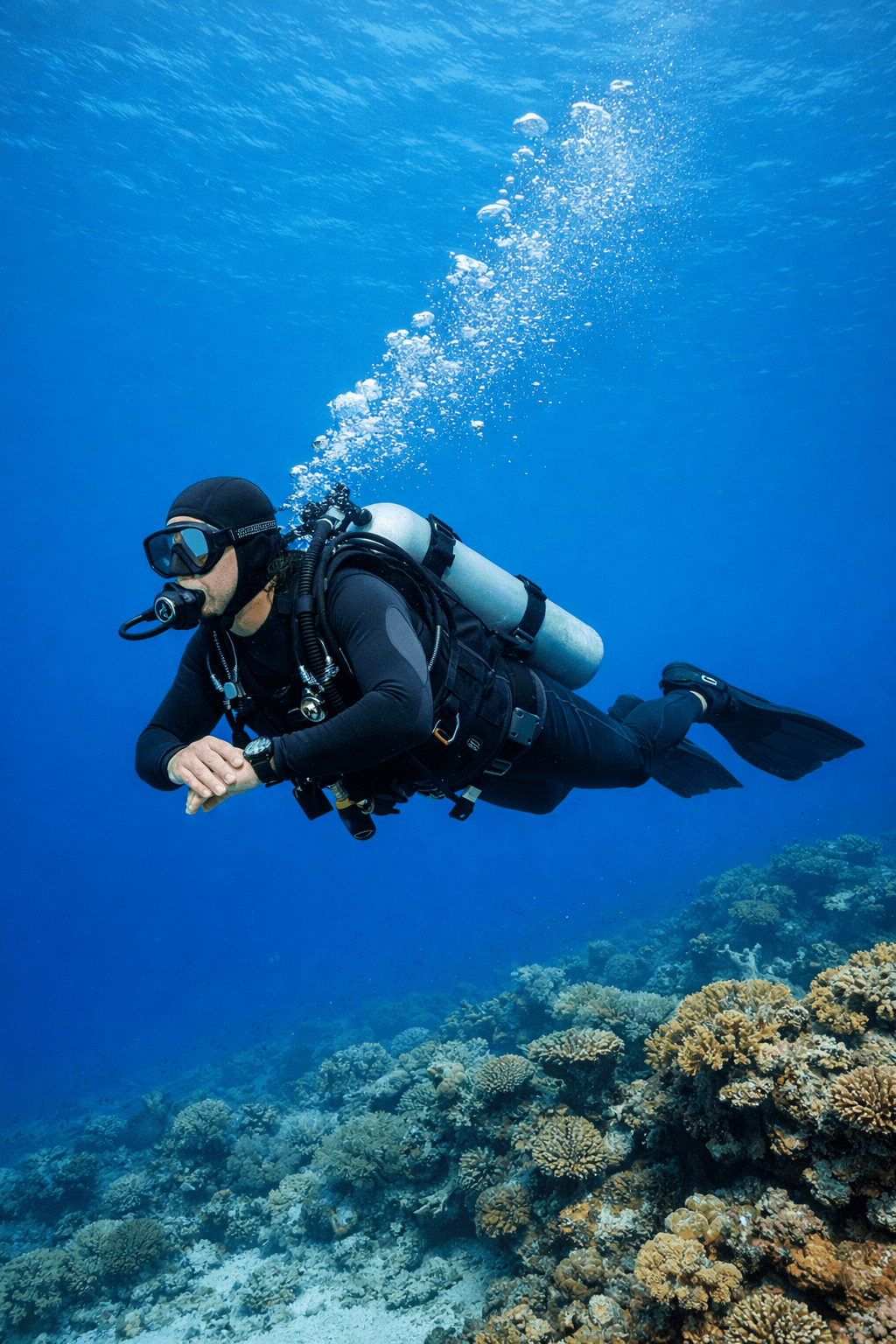
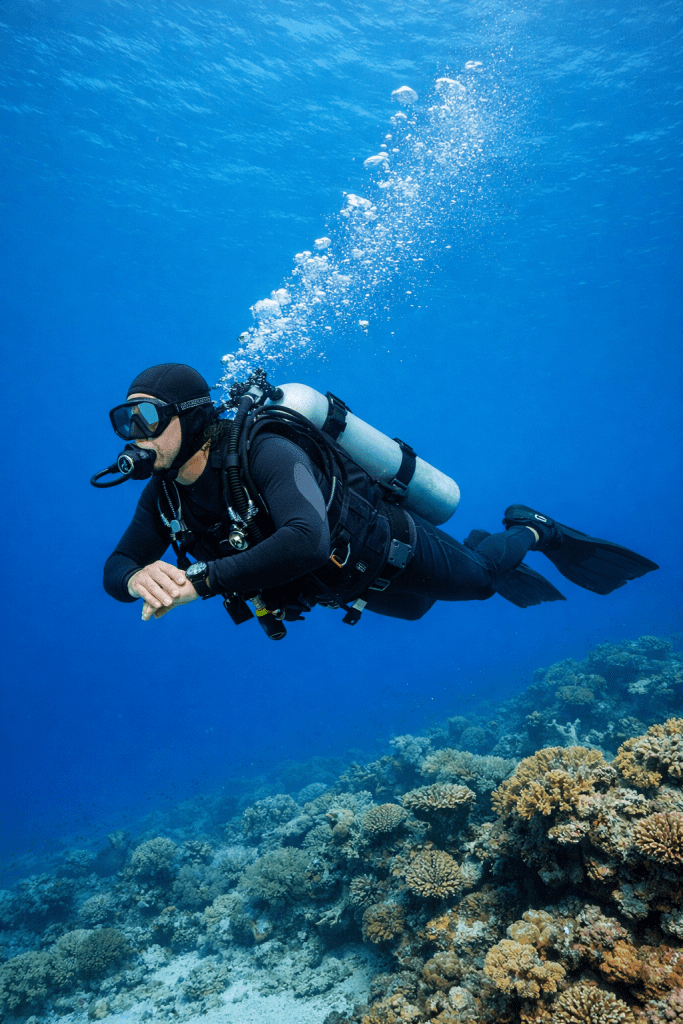
Underwater, breathing is not only about gas. It directly shapes physiology, fine buoyancy control, and psychological state. And because buoyancy and stress determine how a diver moves through the water, breathing also helps determine the amount of direct pressure that diver places on the reef.
That is not a metaphor. It is a diving fact.
We often teach breathing in narrow terms: never hold your breath, stay relaxed, save air. All true. But that is only the basic briefing. Breathing is more than a safety rule or a question of gas economy. It is one of the diver’s main tools of control underwater — and, quietly, one of the diver’s main tools of impact as well. As I work on a reef stewardship manual, that connection feels too important to leave sitting in the background like an unopened tank valve.
1. Physiological control
The first level is physiological. A diver who breathes in a rushed, shallow, irregular way is not only using more gas. That diver is also more likely to feel strain, discomfort, and urgency. Underwater, depth, current, exertion, cold, and task loading all make breathing more demanding than it is on land.
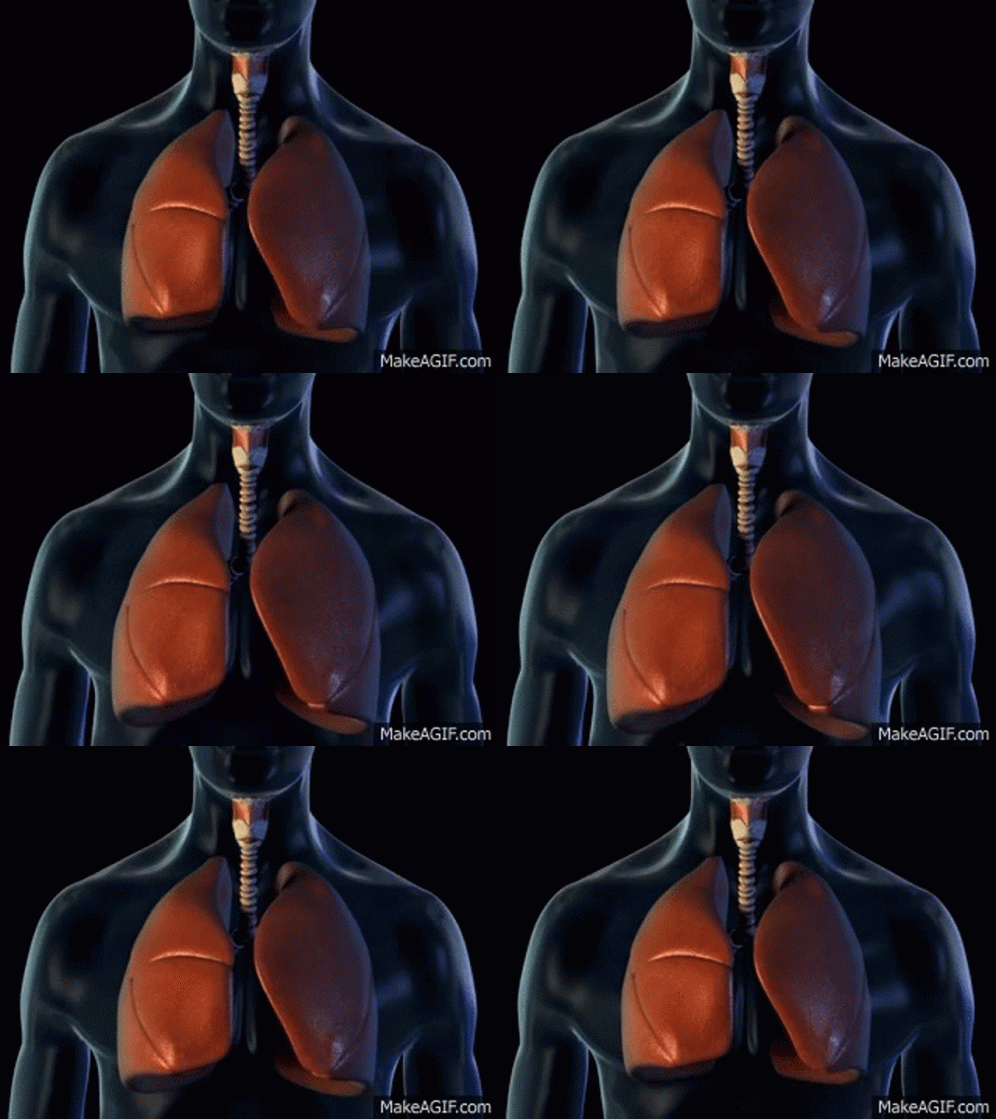
Calm, continuous, efficient breathing supports better gas exchange, reduces unnecessary effort, and helps the diver remain functional and clear-headed. In that sense, breathing is not passive. It is one of the main ways a diver regulates the body underwater.
A great deal of what we call “being comfortable in the water” begins there.
2. Buoyancy control
The second level is buoyancy. In scuba, the lungs are part of fine buoyancy control. Not as a substitute for proper weighting or correct BCD use, but as a precise adjustment tool. A slightly fuller inhale increases lift. A relaxed exhale allows a gentle drop. Small changes in breathing help a diver hover more accurately, settle more softly, and maintain position with less correction.

Set against diver training itself, this is not an over-reading of a book on breathing. Peak buoyancy training already links weighting, trim, air consumption, ascent control, and environmental care. Technical training raises the bar further, demanding that core skills be executed in neutral buoyancy and stable trim. What the broader reflection adds is simply this: breathing is one of the mechanisms through which all of that happens.
This is one of the quiet foundations of good diving. The diver who breathes well usually moves better. Trim improves. Corrections become smaller. The body grows quieter in the water.
And that has an immediate environmental effect. Better buoyancy means less bouncing above the reef, less accidental contact, less sediment kicked up, and less unnecessary movement in fragile spaces. A reef does not particularly care whether a diver meant well. It responds to contact, turbulence, and pressure all the same.
3. Psychological control
The third level is psychological. Breathing is one of the fastest ways to influence state of mind. In diving, stress often shows up in the breath first: it becomes fast, tight, shallow, or uneven. Once that happens, the diver is more likely to rush, over-correct, and lose precision.

The reverse is also true. A diver who deliberately restores a slower, steadier rhythm can often interrupt that escalation before it becomes real stress or panic. Breathing becomes an anchor: immediate, physical, and available. That helps safety. It also helps the reef. A stressed diver usually moves badly: harder finning, poorer trim, abrupt corrections, less awareness of distance from coral. A calmer diver generally moves with more precision and leaves a lighter trace. Grace underwater is not only aesthetic. It is ethical.
Why this matters
Reef impact is not limited to obvious contact. It also takes the form of unstable hovering, repeated rises and drops, heavy finning, stirred sediment, and tense, imprecise movement through sensitive spaces. In that sense, breathing matters not only inside the diver’s body, but also in the physical footprint the diver leaves underwater.
That is why breathing deserves a more serious place in how we talk about responsible diving. Not because breathing is fashionable. Not because it sounds profound over coffee after the dive. But because it has practical consequences. Better breathing supports better control. Better control reduces unnecessary impact. And that, for anyone serious about reef stewardship, is not a small thing.
One clear takeaway
Breath is not a book about scuba diving. By bringing attention back to breathing itself, it reminds us that something so automatic can also be trained, refined, and understood more deeply. And for divers, that matters: greater awareness of breathing on land can translate into better control, steadier buoyancy, and greater composure underwater. Underwater, breathing shapes function, movement, state of mind, and environmental footprint all at once.
A calm diver is often a better diver.
And a better diver usually leaves a lighter trace.
 Bart Vander Plaetse
Leave a comment