

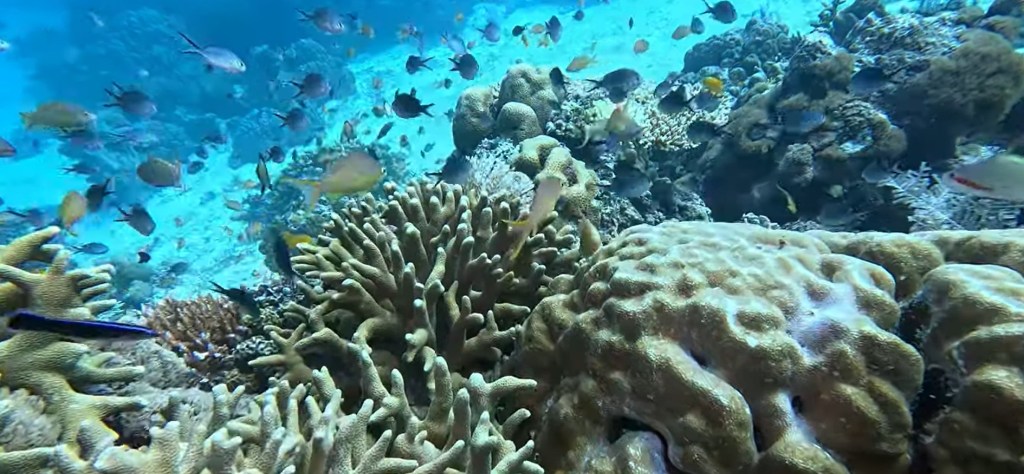
I thought I was learning to dive.
That is the simple version. The harmless version. The version in which a man discovers a passion, chases it hard, and gets better at something he loves.
But that is not really what happened.
What happened is that the sea got under my skin.
At first, it was wonder. Pure and uncomplicated. Weightlessness. Silence. The feeling of crossing into a world that had always existed without me and yet, suddenly, allowed me in. Light falling through blue water. Life moving with an ancient calm. The humbling realization that everything down there was more beautiful, more intricate, and more self-possessed than I had imagined from the surface.
One dive became several. Several became many.
Curiosity became attachment. Attachment became something close to addiction.
I was no longer simply going diving. I was organizing my life around diving. Planning for it. Thinking about it. Measuring time between dives. Carrying the sea in my mind long after surfacing.
Then came the next transformation: I stopped being only a diver and became an instructor.
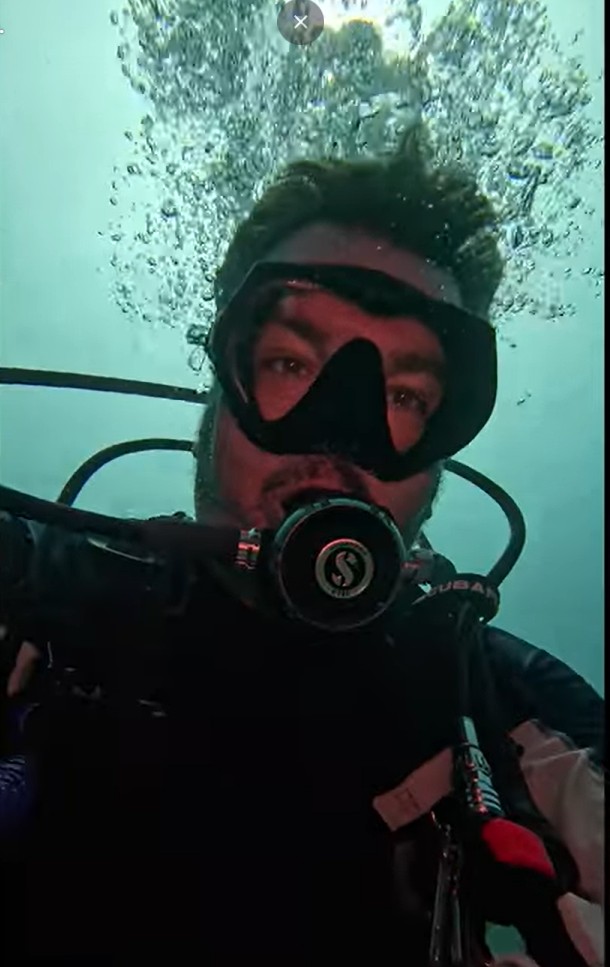
That changed everything.
Because teaching strips romance down to essentials. It is no longer only about the thrill of descending into the blue. It becomes about responsibility. Repetition. Discipline. Helping others find calm where panic can rise, control where chaos can lurk, confidence where uncertainty lives.
Technique mattered. Safety mattered. Buoyancy mattered. Good habits mattered.
I learned that elegance underwater is not style. It is ethics in motion. Precision. Restraint. Awareness. Respect.
For a while, that was enough. More than enough, even. I was deep in the craft of diving.
And then another door opened.
Photography.
A camera slowed me down in a new way. It taught me to look longer, not just pass through. To notice patterns. Textures. Small behaviors. Tiny dramas. The way a fish hovers above a coral head. The geometry of a reef. The damage hidden inside beauty. The beauty hidden inside what most people would swim past.
Photography did not just help me capture the underwater world.
It trained me to see it.
And once you begin to truly see, you cannot unsee.
The reef stopped being only a playground. It became a living system. A fragile one. Not just spectacular, but vulnerable. Not just full of life, but full of pressure. Not just a site for adventure, but a place where carelessness, ignorance, extraction, climate stress, bad tourism, and bad governance all leave their mark.
That realization changed the direction of my diving again.
Through PADI AWARE, Dive Against Debris, fish identification, coral reef conservation, and shark conservation, I found my first serious bridge between diving and conservation.
These programs matter because they do something practical. They turn vague concern into diver action. They teach respect for wildlife, better buoyancy, citizen science, more responsible tourism, and the idea that a diver can be more than a consumer of underwater beauty.
Through them, I learned how to translate concern into conduct.
How to make conservation practical for divers.
How to move people from admiration to attention.
How to connect in-water behavior with a wider ethic of care.
That is real. And I value it deeply.
But over time, another feeling began to grow in me too.
A quiet dissatisfaction.
Not with diving.
Not with teaching.
Not with the value of these courses.
With the limits of my own foundation.
I began to feel that I knew how to act before fully understanding the landscape in which action sits.
I could teach divers to care. But did I fully understand reef ecology?
I could run a debris survey. But did I understand enough about monitoring frameworks?
I could teach fish identification. But did I yet grasp trophic function deeply enough?
I could speak about shark conservation. But did I understand enough about fisheries, governance, and social trade-offs?
I could use the word regenerative. But had I really earned it?
That question matters.
Because the ocean does not need more beautiful words floating above shallow understanding.
The dive world does not need more eco-language without substance beneath it.
And I do not want my second career to be built on atmosphere. I want it built on foundations.
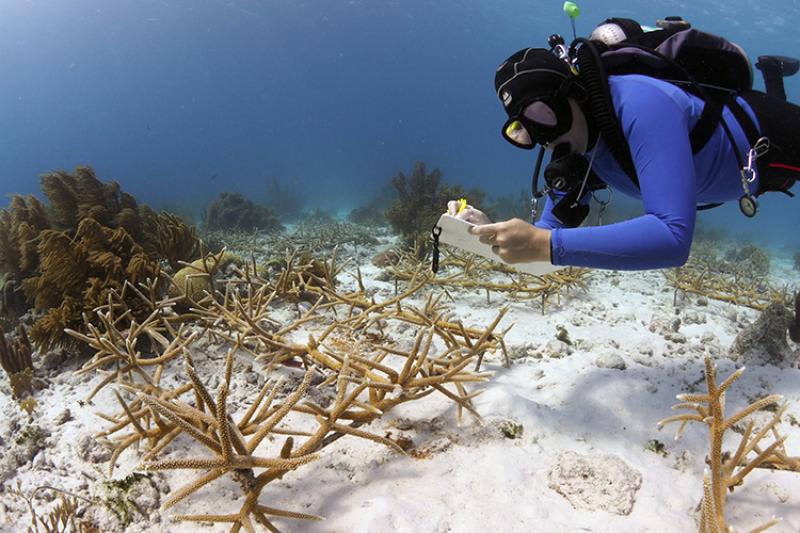
So I have decided to go deeper again.
This time not deeper in metres, but in meaning.
I am now preparing a serious course of study around three connected pillars: coral reef ecology, conservation, monitoring, and restoration; reef-associated fish, trophic function, and conservation; and tourism, community governance, and regenerative reef stewardship.
That last part matters to me deeply.
Because reefs are not only ecosystems. They are living territories. Places where fish, coral, divers, local communities, livelihoods, governance, beauty, extraction, care, and hope all collide.
If I am to build a true career 2.0 in regenerative tourism, it will not be enough to guide people beautifully through underwater wonder. I will need to understand what stewardship really demands. What local benefit really means. What restoration can and cannot do. What tourism supports, and what tourism quietly destroys while calling itself sustainable.
This is the work now.
Not abandoning diving.
Not abandoning instruction.
Not abandoning the practical strengths I gained through PADI.
But building under them. Around them. Beyond them.
I think the path ahead is becoming clear.
Not just diver.
Not just instructor.
Not just underwater photographer.
But translator. Steward. Builder of bridges between reef science, diver action, local reality, and a more honest kind of tourism.
I do not yet know the final form this will take.
Maybe it becomes a course.
Maybe a blog series.
Maybe field-based learning journeys.
Maybe an ethical diving framework.
Maybe something new altogether.
What I do know is this:
Something important is taking shape.
I started by learning how to dive.
Now I am learning what a dive life should stand for.


 Bart Vander Plaetse
Leave a reply to Hilda Hausard Cancel reply